Advances in laser wavelength technology, pulse calibration, and cooling systems have fundamentally changed what is possible. Today, laser hair removal for dark skin is not only safe but highly effective when performed with the right equipment and the right expertise.Not every laser is appropriate for every skin tone, and not every provider understands the clinical nuance required to treat darker complexions safely.
This guide explains the science behind the treatment, the technology that makes it work, and what to evaluate when choosing a provider you can trust with your skin.
Why Darker Skin Was Historically Excluded
Laser hair removal works through a principle called selective photothermolysis. The laser emits a specific wavelength of light that is absorbed by melanin, the pigment responsible for the color of both hair and skin. When the laser energy is absorbed by the melanin in the hair follicle, it converts to heat and damages the follicle’s ability to produce new growth.
The challenge with darker skin is straightforward. When the skin itself contains a high concentration of melanin, older laser systems could not reliably distinguish between the melanin in the hair follicle and the melanin in the surrounding tissue. The laser would heat both, and the result was often thermal injury to the epidermis, post-inflammatory hyperpigmentation, or in more severe cases, burns and scarring.
The Technology That Changed Everything
The development of the Nd:YAG laser operating at a 1064 nm wavelength marked a turning point in medical aesthetics. Unlike shorter-wavelength systems such as the Alexandrite (755 nm) or standard diode (810 nm), the Nd:YAG wavelength penetrates deeper into the dermis and is absorbed less aggressively by melanin at the skin’s surface.
This means the laser can bypass the melanin-rich epidermis and deliver its energy more precisely to the hair follicle itself, where melanin is concentrated within the bulb and shaft. The surrounding skin absorbs significantly less energy, reducing the risk of thermal damage to a level comparable to what lighter-skinned patients experience with standard systems.
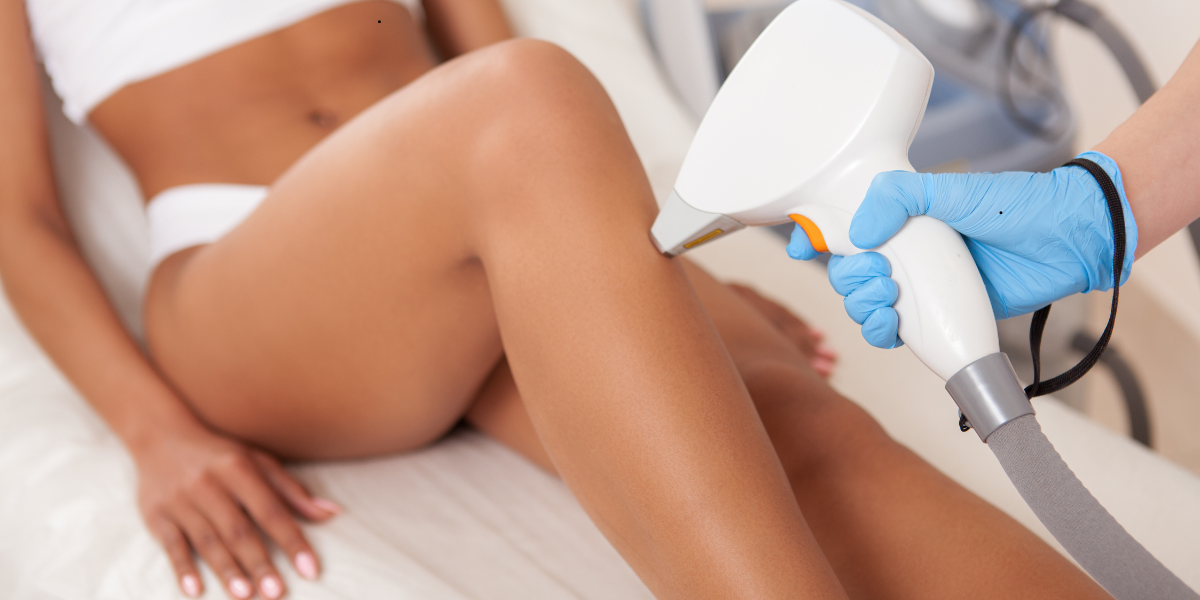
Modern platforms like the Clarity system used at The Formula Medspa combine the Nd:YAG wavelength with integrated cooling technology and adjustable pulse durations, giving providers precise control over how energy is delivered and how the tissue responds. Longer pulse durations allow heat to build gradually in the follicle rather than spiking sharply, which further reduces the risk of epidermal injury.
The result is a treatment that is both safe and effective for patients across the full Fitzpatrick spectrum, including types IV, V, and VI.
UNDERSTANDING THE FITZPATRICK SCALE Dermatologists classify skin tones using the Fitzpatrick scale, which ranges from Type I (very fair, always burns) to Type VI (deeply pigmented, never burns). Patients described as having dark or melanin-rich skin typically fall between Types IV and VI. This classification helps providers select the appropriate laser wavelength, fluence, and pulse duration for each patient’s complexion. During your consultation at The Formula, your provider will assess your skin type and customize every parameter accordingly. |
How Laser Technology Compares Across Skin Tones
| LASER TYPE | WAVELENGTH | FITZPATRICK RANGE | NOTES FOR DARK SKIN |
| Alexandrite | 755 nm | Types I to III | Not recommended for darker skin. High melanin absorption increases burn risk significantly. |
| Diode | 808 to 810 nm | Types I to IV, possibly V with caution | Newer diode systems with long pulse and advanced cooling can treat some darker tones, but require experienced calibration. |
| Nd:YAG | 1064 nm | Types I to VI | Safest and most effective option for dark skin. Deeper penetration bypasses surface melanin. Gold standard for Fitzpatrick IV to VI. |
| IPL | 500 to 1200 nm (broad) | Types I to III | Not a true laser. Broad spectrum makes it unsafe for darker skin tones due to unpredictable melanin absorption. |
What Results to Expect on Darker Skin Tones
When performed with the correct laser and by an experienced provider, patients with Fitzpatrick skin types IV through VI can expect meaningful, lasting hair reduction.
Clinical research on Nd:YAG systems has consistently demonstrated effective follicle damage in darker-skinned patients with a low incidence of adverse effects, as documented in the Journal of Drugs in Dermatology.
Most patients require six to ten treatment sessions, spaced four to six weeks apart, depending on the treatment area and hair density. Darker skin types sometimes benefit from additional sessions because providers use slightly conservative energy settings to prioritize safety, which means each session produces slightly less follicle destruction compared to aggressive settings used on lighter skin.
Patients who complete their full treatment course typically achieve 70 to 90 percent reduction in hair density, with remaining hairs growing in finer, lighter, and significantly slower.
Two factors strongly influence the quality of your outcome:
- The provider’s experience treating melanin-rich skin, including their understanding of safe fluence ranges, pulse durations, and cooling protocols specific to darker complexions
- Your consistency with the treatment schedule, as hair grows in cycles and each session targets a different portion of active follicles
Common Treatment Areas
Laser hair removal for dark skin is effective across all of the same body areas treated on lighter complexions. The most frequently requested areas include the underarms, bikini line, legs, face (particularly the upper lip and chin), chest, and back.
Patients with coarser, thicker hair often respond especially well to Nd:YAG treatment, because the higher melanin concentration in the follicle creates a strong target for the laser’s energy. This is particularly relevant for patients who experience pseudofolliculitis barbae, commonly known as razor bumps, which disproportionately affects individuals with curly, coarse hair. Laser hair removal can significantly reduce the occurrence of ingrown hairs and the inflammation that accompanies them, providing relief that shaving and waxing simply cannot offer.
The Formula offers laser hair removal in Rye, NY for all body areas, as well as a dedicated men’s laser hair removal program for patients who prefer treatment plans designed specifically for male hair patterns and density.
How to Prepare for Your Treatment
Preparation plays a meaningful role in both the safety and efficacy of your laser hair removal sessions, especially on darker skin. The following guidelines apply to all patients but are particularly important for those with higher melanin content.
- Avoid sun exposure and self-tanners for at least two weeks before treatment.
- Shave the treatment area 24 to 48 hours before your appointment.
- Do not wax, pluck, or thread for at least four weeks before your session.
- Discontinue retinoids and exfoliating acids for five to seven days prior.
What Recovery Looks Like
Most patients return to their routine immediately after treatment. The treated area may appear slightly pink or feel warm for the first several hours, similar to a mild sunburn. On darker skin, this redness may present more as a darkening or bronzed appearance, which is a normal inflammatory response and resolves within 24 to 48 hours.
Mild perifollicular edema, small raised bumps around each treated follicle, is actually a positive sign. It indicates that the laser successfully reached and heated the hair root. This resolves on its own, typically within the first day.
In the days following treatment, treated hairs will begin to shed. The follicle has been damaged, and the hair is being expelled by the body. This shedding process can take one to two weeks and sometimes resembles stubble before the hair releases from the skin.
AFTERCARE THAT MATTERS MOST Apply a broad-spectrum mineral sunscreen daily for the first two weeks after each session, even if the treated area is normally covered by clothing. Avoid heat-generating activities such as hot yoga, saunas, and vigorous exercise for 24 to 48 hours. If post-treatment pigment changes are a concern, your provider may recommend a short course of a gentle brightening agent. For complementary skin care between sessions, a customized facial in Rye, NY can support hydration and barrier health without interfering with your laser protocol. |
How to Choose a Provider for Darker Skin
A provider who regularly treats diverse skin tones will understand the specific adjustments required for safe treatment: lower starting fluences with gradual increases, longer pulse durations to reduce thermal spikes, appropriate spot sizes, and effective cooling protocols. They will also know how to recognize early signs of adverse reactions and adjust accordingly.
When evaluating a clinic, consider the following. Ask which laser system they use and whether it includes an Nd:YAG wavelength option. If the clinic operates exclusively with Alexandrite or IPL systems, they are not equipped to treat darker skin safely. Ask to see results on patients with similar skin tones. A provider confident in their work will be comfortable sharing before and after documentation. Ask about the provider’s training and experience with Fitzpatrick types IV through VI specifically, not just a general claim of treating “all skin types.”
At The Formula Medspa, our Clarity Laser system includes the 1064 nm Nd:YAG wavelength, and our providers are trained to customize every parameter to each patient’s skin tone, hair type, and treatment area. You can learn more about our approach on our laser hair removal page.
The Emotional Weight of Being Told It Won’t Work for You
It would be incomplete to discuss this topic without acknowledging the experience that many patients with darker skin have had in aesthetic settings. Being turned away, or worse, being treated with the wrong technology and left with scarring or discoloration, creates lasting distrust. That distrust is earned.
If you have been told in the past that laser hair removal is not safe for your skin, you deserve to know that the technology has changed.
Frequently Asked Questions
Is laser hair removal safe for Dark skin?
Yes, when performed with an Nd:YAG laser (1064 nm wavelength) by an experienced provider.
Can laser hair removal cause hyperpigmentation on dark skin?
The risk of post-inflammatory hyperpigmentation is low when the correct laser, settings, and aftercare are used.
How many sessions will I need?
Most patients with darker skin tones require six to ten sessions, spaced four to six weeks apart.
Does laser hair removal hurt more on dark skin?
The sensation is similar for all skin types. Most patients describe it as a quick, warm snap against the skin. Modern systems with integrated cooling technology significantly reduce discomfort during the treatment.
Can laser help with razor bumps and ingrown hairs?
Absolutely. Pseudofolliculitis barbae, or razor bumps, is one of the most clinically appropriate reasons to pursue laser hair removal on darker skin. By reducing hair growth at the follicle level, laser treatment eliminates the cycle of curly hairs growing back into the skin and causing inflammation.
What areas can be treated?
All standard treatment areas are appropriate, including the face, underarms, bikini line, legs, chest, back, and arms. Your provider will adjust settings for each area based on skin sensitivity and hair density. For additional skin concerns in treated areas, complementary options such as chemical peels in Rye, NY or laser skin treatments in Rye, NY can address tone and texture once your hair removal course is complete.
Your Skin Deserves Technology That Was Built for It
Laser hair removal for dark skin is not an exception or a workaround. With the right laser and the right provider, it is a safe, effective, and lasting solution for unwanted hair on every skin tone.
If you are ready to explore laser hair removal or any have questions, schedule a complimentary consultation and let us show you what the right technology and the right expertise can do.